
Youth Empowerment: Helping Young Adults Succeed
Happy teens and young adults are thrilled they have learned the intricacies of money management and financial health
.png)
.svg)
Joth Smith
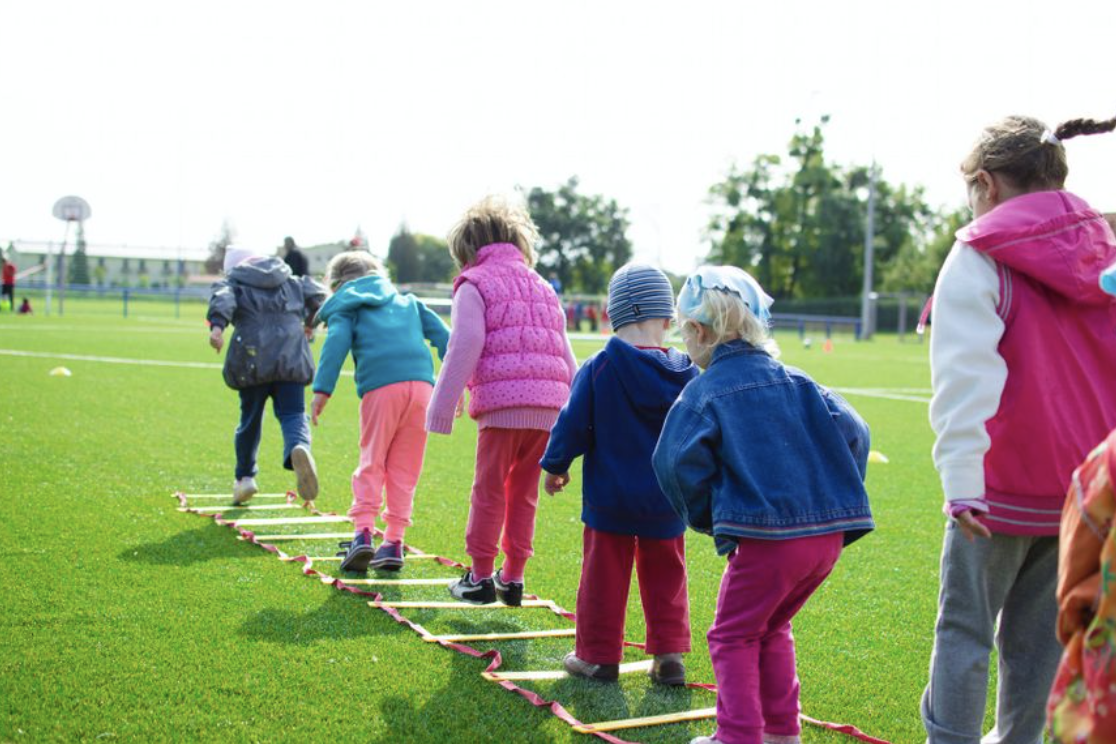
Without our youth, we are headed for an uncertain future. As new generations start to be in charge, the old guard shifts and new ideas are brought to the table. But how do we make sure that the next generation beards the standard values that we cherish? By empowering them, of course. In this article, we will dive into your empowerment, why it matters so much, and what you can do help it.What is youth empoyermnet
Youth empowerment is often described as a process, not a single outcome. It includes internal growth (like confidence and self-efficacy) and external conditions (like opportunities, safety, and supportive relationships).
When those four pieces come together, teens are more likely to participate, try, recover from mistakes, and plan ahead, not because they have become “perfect,” but because life feels more navigable.
Why youth empowerment matters
Motivation fluctuates. It's influenced by a variety of factors, including a person's sleep, stress, rejection, family conflict, and their sense of safety. Motivation can be high some days, but absent others. An empowered individual has stability. Their motivation is built upon a foundation of empowerment, which is not an emotional state but rather a system of support.
A youth empowerment model recognizes this. If we want to see our youth make better choices, then the strategy cannot be "just try." Instead, we need to develop systems that facilitate better choices, regardless of what the circumstances might be. These systems should provide youth with support without adding pressure. The purpose is not to force our youth to grow up too quickly. Rather, we should work to create a system that allows our youth to feel confident, secure, and connected, and thus able to learn and practice the necessary skills to become adults.
The financial side of empowerment: Why money is a big deal here
Money isn't simply a matter of numbers for teens and young adults. It represents a sense of independence, safety, community, and potential choices for their futures. Adults can sometimes overlook the fact that money might have a huge impact on the worldview of young people. If you are in debt, you might not care about money at all, and not even be reviewing your bank balance. You could be inclined to forego social invitations or accept social invitations you cannot afford due to fear of being left out. Empowerment is the ability to take control of your financial situation and knowledge, with a solid support system.
We also know, from large-scale assessment data, that many teens are entering adulthood without baseline money skills. In the OECD’s PISA 2022 financial literacy assessment (across 14 OECD countries that assessed financial literacy), an average of 18% of students did not reach basic proficiency (baseline). (OECD: PISA 2022 financial literacy)
What empowers teens in real life
Empowerment is rarely just one program or one inspiring speech. Empowerment is an accumulation of several experiences that confirm for a person: "You may make mistakes, but you can learn from them. You have something to offer others. You may fall down, but you can get back up again."
Here are five high-impact empowerment inputs — each viewed through a ThriveNest lens:
1) One stable relationship that doesn’t require perfection
When young people who experience emotional, physical, or relational trauma have access to a steady, positive adult relationship or older peer who does not demand perfection,this provides a "base" they can return to after a negative experience or when they feel the need to hide their mistakes or shortcomings.
Mentoring programs show measurable benefits across youth outcomes in research syntheses. For example, a meta-analysis of mentoring programs serving youth involved with foster care found a small-to-medium overall effect size (reported as g = 0.342). (Rhodes Lab: mentoring meta-analysis)
2) Skills that reduce “life surprises”
Teen empowerment increases as teenagers develop and practice skills that minimize day-to-day obstacles. A reduced sense of chaos and uncertainty in daily life can be attributed to one's ability to plan and budget for a week on limited funds, clearly ask a teacher or supervisor questions, defend oneself in a way that does not escalate into an altercation, or make decisions using incomplete data. Although these are basic skill sets, they can help avoid more severe consequences. Money provides a good example of this phenomenon due to its perceived "uncouthness."
If practical money management is developed early in a person’s life, their life may appear less punitive and more reasonable. The research conducted by the CFPB states that developing young people’s financial capabilities requires much more than simply educating them about facts. It requires the development of several key areas, including planning ability, self-control, habits, social norms, and decision-making skills, which work together.
3) Opportunities to participate in decisions
A teenager will often feel powerless when all of their choices are being made by others. When decisions are being made for you, your energy will run out quickly. The teen's energy will build with empowerment when they take on real roles within the group, which may be as small as making one of two or three different project options orparticipating in an effort in the community that they developed. These small amounts of ownership will begin to influence the teen's view of themselves, moving from a passive participant to an active contributor, and this is where things can get a lot more interesting and fun.
4) Emotional skills that protect focus and future planning
When teenagers are able to manage their stress, resolve conflicts, and recover from setbacks, they're empowered. That's not being weak; that's having ability or capacity.
Studies have consistently shown that school-based social and emotional learning (SEL) interventions have positive outcomes. A large-scale meta-analysis of 213 school-based SEL programs showed improvement in social-emotional skills, behavioral outcomes, and academic performance, with a significant 11 percentile point increase in student achievement compared to control groups
This matters for empowerment because academic confidence can shape opportunity, and because SEL often strengthens the exact “inner tools” teens use to make stable decisions.
What more recent research says about SEL impact
While the Durlak et al. (2011) meta-analysis remains the most detailed source of numeric effect sizes across multiple outcome areas, more recent global research confirms that these patterns are still present today.
Recently, Cipriano et al. (2023), conducted another meta-analysis of 424 universal school-based SEL studies across 53 countries, representing approximately 575,000 students. This analysis demonstrated that, as seen in previous research, participation in SEL programs continues to relate to improvements across the broad array of areas previously discussed: academic performance, social-emotional functioning, behavior, attitudes, and perceptions regarding school climate and school safety.
5) A plan for money that doesn’t trigger shame
Financial empowerment should not feel like a test of worthiness. Teens don’t need to feel “behind” to get better.
A ThriveNest-friendly money plan is:
- Simple enough to return to after a hard week
- Private enough to avoid shame
- Flexible enough to reflect real life
Helpful reality check: teaching money concepts matters, but it’s not magic. Empowerment improves most when knowledge is paired with practice, support, and a system that reduces shame.
Real-life scenarios: what empowerment looks like on the ground
These scenarios reflect common “empowerment moments”, the crossroads where a teen can grow, freeze, or cope in ways that create later stress.
Empowerment in these moments doesn’t come from personality changes. It comes from small, repeatable skills that reduce surprise and create a feeling of steadiness.
Small habits that quietly change these situations
- These habits don’t require perfection.
- They reduce the number of money surprises.
- They make teens feel less trapped and more in control.
This is the ThriveNest core idea: empowerment is often a tiny repeatable practice, not a dramatic personality shift.
A simple framework: the empowerment ladder
You can think about empowerment as moving up a ladder, not in worth, but in capacity.
Youth empowerment for mentors and educators
Empowerment can fade away quietly for an adult if he/she confuses support (helping) with compliance (doing what you are told). Teenagers do not have a feeling of empowerment if they are simply given directions without a sense of context, options or respect. A ThriveNest approach to providing guidance places emphasis on creating an environment of clarity and respect as opposed to control.
This is achieved by being open and honest about why a particular rule or boundary exists; by giving teens and young adults real choices as often as possible; and by helping to protect the person'sdignity. This is also accomplished through the use of small, repetitive skill-building techniques as opposed to large, one-time lectures. In time, consistent application of these skills will create a sense of capability in the teen and ultimately lead to greater willingness to participate and improve themselves. The CFPB’s youth capability work is useful here because it doesn’t reduce financial learning to facts. It recognizes that long-term capability grows through executive function and habits, not just knowledge. (CFPB: Building Blocks)
How ThriveNest fits into youth empowerment
Thrivenest fits perfectly into youth empowerment by helping teens to XYZ.
FAQ
What does youth empowerment mean in simple terms?
When people talk about youth empowerment, they're referring to giving young people the real power to make decisions, act on those decisions, and have an impact on their own lives. This includes having the right tools and resources, such as skills, supportive connections, and opportunities, in addition to having the self-confidence to actually use them. The process of developing and building empowerment is based on development, with both practice and support systems that provide a safe space for growth; it is not based on being perfect.
How is financial empowerment connected to youth empowerment?
A teen's perception of safety and their options are directly influenced by money. When teens develop foundational financial knowledge and establish a routine of establishing and maintaining basic budgetary practices (such as planning out each pay cycle or saving a small portion of income) it will help to make life more predictable and less stressful. Once this predictability exists, many times, it creates an increased level of confidence which can also lead to greater levels of engagement and planning for the future.
What helps empower teens the most?
Typically, empowerment is developed through the interaction of several different factors, including: at least one stable relationship that provides support, some level of practical skills, opportunities to engage in decision-making, and some level of emotional skills to deal with stress and setbacks. When teens experience success in a safe setting, they will generally be more willing to attempt other tasks.

Subscribe to newsletter
Browse all blogs
.svg)
.svg)

.png)
.svg)
